
I’ve been watching all of the reality TV/documentary historical farming shows on Tubi featuring Ruth Goodman, Peter Ginn, and Alex Langlands, and they have been a surprising comfort. Just began “Wartime Farm” and it hits close to home.
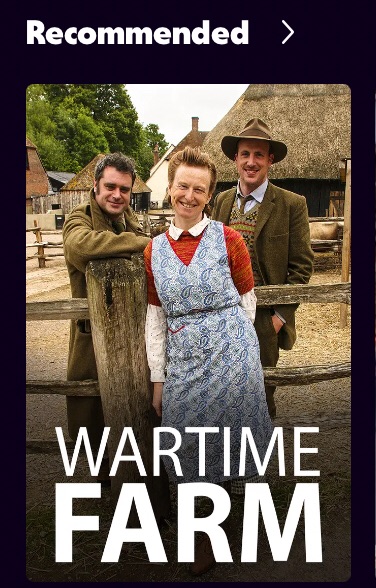
Ruth is a historian, Alex and Peter are archaeologists, and they’ve made a series of shows where they spend a year living — and farming — just like people of a specific time period did, using only technology from that time, growing and eating only food available at that time, wearing period clothing, etc. What I especially love is the emphasis on ordinary people, rather than nobility or the wealthy; watching them tackle farming and living in the 16th, 18th, and early 19th centuries (Tom Pinfold is swapped in for Alex on the Tudor period/16th century show) has been a revelation.
I thought I was already sufficiently grateful for daily comforts like hot running water, the ready availability of a ridiculous variety of food, and so on, but no. Now I’m also grateful that I don’t have to make my own soap, or sleep on rushes, or use stale urine in a surprising number of applications (fulling cloth and making dye, making first aid salve, etc.).
Also, I now know that I’ve unknowingly eaten like a Tudor peasant many times. One-dish meals we make at home that are supposed to be hashes or stir fries sometimes devolve into what my partner has dubbed “gloop” (the flavor varies, but the name indicates the texture). Watching Tudor Monastery Farm, I learned that “gloop” was “pottage” back in Tudor times. On the Edwardian Farm and the Victorian Farm too, there are also some dishes that look suspiciously like gloop, indicating that we have always eaten gloop, at least occasionally, and maybe always will.
Watching the shows has also helped me connect more deeply to the food I eat, some of which is still grown on small farms, but even the factory-farmed stuff still grows out of the earth following the same basic principles.
In Wartime Farm, the crew does the work and lives the lives of rural people in Britain during World War II, who were suddenly tasked with feeding an island nation that had relied heavily on imported food and supporting the war effort while under the constant threat of attack. Ruth, Alex, and Peter talk through what they’re doing, and help connect the dots about why mechanization/technological advances, such as trading horses for tractors, and coal stoves for electric or paraffin ones, were pushed so hard: so that more land could be planted to grow food to keep the nation from starving. The labor-saving devices in the home, like electrical appliances and linoleum flooring, gave women more time to help in the farming efforts, and to do all the jobs left behind by men who were off fighting.
On an emotional level, these people lived under great uncertainty and fear. Nazi-occupied France was just across the channel, just 38 miles (61 km) away. As the war progressed, they faced aerial bombardment and the threat of a land invasion at any moment. They had to be tough and creative, and they had to work together. They succeeded, and Britain did not fall to the Nazis.
So what’s the “solace” part? I learned that we are not alone in facing great uncertainty; other people have done it throughout history, and even though they faced different challenges and had different resources available, we can share their ingenuity, resilience, and courage.
I also learned that it’s possible to survive a long time on gloop.
 River Kanning, Writer